Sunday, December 11, 2011

Inspired #5 - Wikileaks


      On October 25 2011, we had the opportunity to listen to Philip J. Crowley speak at the Lewis Katz Building regarding Wikileaks. PJ Crowley famously stated that handling of Bradley Manning was, "ridiculous and counterproductive and stupid." Bradley Manning is the soldier accused of providing Wikileaks with the classified government intelligence. Three days after the comment, Crowley resigned from his position as State Department spokesperson. It was definitely very interesting listening to the opinion's of PJ Crowley. He brought a unique perspective on Wikileaks that not many people have.
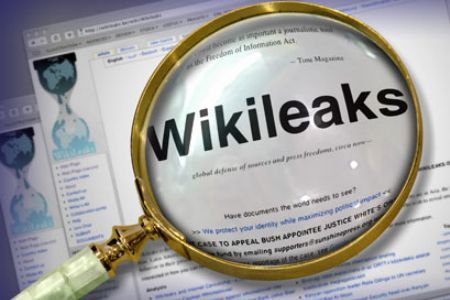
The issue with Wikileaks release was not the actual information contained within the cable release. While there was a few embarrassing releases, most of the information contained within the leak was day to diplomatic operations. Instead, the damage done by Wikileaks come from the release of sources and methods American diplomats use to gather information. Taking IST 402: Introduction to the Intelligence Community this semester with Professor Don Shemanski, he has stressed that losing the sources and methods was the real damage caused by the Wikileaks release. Now anyone in the world can find out the kinds of the information that American diplomats are looking for in the release of the diplomatic cables.
Wikileaks has created an interesting debate online on whether the organization deserves journalistic privileges. Supporters of Wikileaks argue that the organization is fulfilling a journalistic role by publishing information provided by whistleblowers. Opponents of the organization consider the actions of the organization as criminal in nature. Recently, the organization won the top Australian Journalist prize, the Walkey Award. Winning such, a prestigious award does help solidify Wikileaks as a journalistic organization.

Personally, I find myself split between the two vastly different opinions of the organization. One the one hand, Wikileaks does not gather any of this information themselves. Instead, "whistleblowers" provide all of the information provided to Wikileaks. If you start censoring an organization because of the information it provides, you create a slippery-slop going into the future. If we start censoring Wikileaks now, what is to stop similar censorship in the future? Meanwhile, I cannot justify the actions by Wikileaks in releasing the classified information without censoring certain details. While Wikileaks claims that, they acted the Federal Government to redact important information before the release, which was nothing more than a publicity act. The Federal Government would never willingly certain parts of classified information so an organization could release the rest. By just the releasing information in mass, Wikileaks compromised vital sources all around the world. Future sources will now be hesitant to work with foreign governments because there is a chance that Wikileaks later releases that information.

One of the more interesting things regarding the whole Wikileaks situation is the rise of hacktivism in support of the organization. When MasterCard, Visa and PayPal shut off donations to the site, Hacktivists responded by shutting down their site for hours. Had those organizations not tried to shut down Wikileaks effectively, it is possible that rise of hacktivism earlier this year may have never happened. Instead, we saw Anonymous rise to further prominence and the rise and fall of Lulz Sec.

Saturday, December 10, 2011

Inspired #3 - Reddit


In recent years, social news websites have grown in popularity. A few popular social news sites include Slashdot, Digg, and Reddit. Reddit differentiates itself from these other social news sites by allowing users to vote stories up or down and allowing them to create Subreddits. Unlike other popular news sites, users exclusively determine which stories make it to the "front page." Popular stories will get up votes while users downvote unpopular stories. Reddit also allows users to create subreddits, or a smaller community about a specific topic. For example, a subreddit exists to cover only Penn State topics. This creates an interesting dynamic where subreddits become Internet communities. Reddit is one technology that Friedman would absolutely love. Reddit is creating a space for people to communicate globally, no matter where a person is from.

One of the fascinating things about Reddit is the sense of community within the various subreddits and the community as a large. Within the community at large, there is a sense of belonging of a bigger entity. People are not simply users, but fellow redditors. Redditors have a history of coming to the aid of fellow redditors in need. In 2011, created the site randomactsofpizza subreddit to help fellow redditors in need. The idea behind the site was to connect the less fortunate to those that are willing to help. To request or offer pizza, one simply has to post within the subreddit. If someone feels particularly moved by your request, that person can then place an order for that request. One of the interesting dynamic of the movement is that the two co-founders have never actually met.  The two connected online and have since started a movement to help the less fortunate online without ever meeting the other person in person.

On Reddit, two interesting dynamics exist that would both impress and annoy Evgeny Morozov. Historically, Reddit has become well known for its user's generosity. Last year, redditors donated over $600,000 to DonorsChoose in support of Stephen Colbert's March to Keep Fear Alive campaign. Redditors also donated over $150,000 to support Haiti after the 2010 earthquake. Instead of using technology to promote slacktivism, users created a community of activism and charity. However, there does exist within Reddit a community that are simple slacktivists. A recent trend on Reddit is that a user will agree to donate X for every upvote the post receives. The slacktivists simply upvote the post and do nothing else. These are the actions that Morozov so reviled in The Net Delusion.
Reddit is not without criticism however. 

While the website does allow users to connect from all around the world, it does allow "shady" users to connect. On Reddit, there is very little moderation and users can post pretty much anything but illegal content. Until recently, there existed a semi-large subreddit dedicated to the posting of questionable pictures of underage females, or jailbait." While the main jailbait subreddit was eventually shut down, various smaller subreddits still exist today.  While technically legal, this creates an ethical dilemma for moderators. Where do you draw the line and begin censoring questionable material? While the line eventually became quite clear for moderators, the heart of the issue remains a problem for the internet as a whole.

Inspired #4 - Steve Jobs


On October 5, Steve Jobs passed away due to the relapse of his pancreatic cancer. Steve Jobs is perhaps the most inspirational and controversial leader the tech industry has ever seen. Everything that Steve Jobs touched turned to gold and became widely successful. He was not without critics however, who argued that he never truly invented anything. Instead, he simply tweaked other people's idea to fit his vision. Despite what your opinion of Steve Jobs is, the tech industry lost a giant they can never replace.

I find myself more on the side that Steve Jobs did not invent anything and simply tweaked other people's ideas. While he may not have ever invented something, he was the best at what he did. Steve Jobs could see the flaws in other people's designs, and he would not rest until he recreated that product in his perfect vision. He changed the entire MP3 player market, because he thought that every product on the market "truly sucked." Therefore, Steve Jobs went to work at perfecting the MP3 player and introduced the world to the iPod in 2001. The iPod completely revolutionized the market and remains the number one MP3 player in the United States today. When Steve Jobs saw the cell phone and tablet markets, he went through the exact same process as he did with the MP3. Today, it is almost impossible to find a phone that does not have at least he most basic "Smartphone" technologies. By introducing the iPad, Jobs once again revolutionized a market once thought dead. Owning a tablet computer suddenly became the newest thing that you needed to have. Before the iPad tablets, were clunky and required a stylus to operate. Now, tablets no longer require a stylus and instead operate using the multi-touch systems.

While I do not want to speak ill of the dead, I have unfortunately lost some respect for Steve Jobs after the release of his official biography. In his biography, it is quite apparent that Steve Jobs does not appreciate anybody tweaking "his" ideas.  In his biography Steve Jobs said, 

Our lawsuit is saying, “Google, you fucking ripped off the iPhone, wholesale ripped us off.” Grand theft. I will spend my last dying breath if I need to, and I will spend every penny of Apple’s $40 billion in the bank, to right this wrong. I’m going to destroy Android, because it’s a stolen product. I’m willing to go to thermonuclear war on this. They are scared to death, because they know they are guilty. Outside of Search, Google’s products—Android, Google Docs—are shit.
Personally, I find Steve Jobs views to be entirely hypocritical. He made his entire career based on tweaking other people's ideas. Throughout his career, Jobs took other people's idea and made them fit his vision. However, when somebody does the exact same thing to him he is furious. How can he base his entire career off other people's ideas and then are made when somebody else "copies" him?  Perhaps Bill Gates said it best when he said, "I think there’s more than one way of looking at it. I think it’s more like we both had this rich neighbor named Xerox and I broke into his house to steal the TV set and found out that you had already stolen it.”

http://www.newyorker.com/reporting/2011/11/14/111114fa_fact_gladwell

Inspired #2 - Anonymous


Last year around this time, Anonymous became a household name across America. In response to the treatment of Bradley Manning and Wikileaks, Anonymous launched a series of attacks across the internet. Anonymous Targets of Anonymous included Amazon, MasterCard, PayPal, Visa and Sony. Through a coordinated distributed denial of service attack, Anonymous brought successfully brought down the websites of MasterCard, PayPal and Visa. 

The attacks by Anonymous were not the first attacks from the hacker organization. In 2008, Anonymous targeted the Church of Scientology after the church tried to take down a video of a Tom Cruise interview. Called Project Chanology, Anonymous began a series of attacks against the church. A few methods of attacks included: distributed denial of service attack, black faxes, prank calls, and pizza deliveries. Eventually, the group planned a series of protests against the Church at various locations around the world. As part of the protest, the protestors wore Guy Fawkes masks from V for Vendetta. The Guy Fawkes Mask would become the symbol of anonymous. 

The rise of groups like Anonymous certainly raises interesting ethical questions for the public. The actions of Anonymous are not simply hacking in the traditional sense. Instead, these groups are participating in the rise of hacktivism. Hacktivism is the use of computers and computer networks as a means to promote political ends. Just last year, the public became more aware of hacktivism as Anonymous and Lulz Sec both participated in Operation #AntiSec following the Wikileaks backlash.
Anonymous and the rise of hacktivism raises serious ethical concerns that we as a society will need to address in the near future. As a society will we treat hacktivism as another form of activism or will we consider it cyber terrorism? There is no easy answer as both sides of the argument have valid arguments and concerns. If you consider hacktivism a valid form of activism, where do you draw the line between activism and hacking? If someone were to hack Bank of America and stole money protesting the mortgage crisis, would that be considered hacktivism or hacking? The line between hacking and hacktivism is razor thin, and groups like anonymous walk that line every time they operate. The sooner we develop a standard as a society, the better off we will be.

Personally, I find myself constantly in an internal debate between whether Anonymous is a benefit or negative portion of society. As an organization, Anonymous has done both good and bad for the society as a whole. One day they may be shutting down Visa and MasterCard; the next they are shutting down a child pornography network. The "anonymous" nature of the organization certainly does not make it easier for me to make my mind up on the nature of the organization. Anybody on the Internet could claim that Anonymous s did something, because no one really knows whom Anonymous is. Good or bad the actions of Anonymous have done one thing spectacularly well. Anonymous and Lulz Sec have pointed out the pathetic nature of our cyber-security initiatives to the non-technological public. People tend to panic when "hackers" hacked the Central Intelligence Agency. While the CIA hack was a joke, it will at least generate a public discussion on cyber security initiatives in the United States.

Inspired #1 - Stop Online Piracy Act


The Stop Online Piracy Act is one of the most infuriating and misguided bills to be introduced to Congress recently. Introduced on October 26, 2011 the bill is "designed" to improve law enforcements and copyright holder's ability to combat online trafficking in intellectual property and counterfeit goods.[1] Under SOPA, the Justice Department can shut down any web site that is accused of facilitating or enabling copyright infringement. Instead, the bill is simply nothing more than an entertainment industry written bill to protect antiquated business models.
Since the creation of the Internet, the entertainment industry has struggled to adapt and evolve. For years, they have tried attacking anyone that illegally downloads their content. However, as one site shuts down, a new website springs up within hours containing the exact same information. Under SOPA, sites would face a lower burden of guilt before facing removal. It is likely that under SOPA, the Department of Justice could remove legitimate websites all because a user posted copyright material. Under SOPA, YouTube must remove thousands of videos or face removal by the Department of Justice. 

My biggest problem with SOPA is that it painfully obvious that lobbyists bought and paid for the Congressional representatives who introduced the bill. Just last week, it Politico revealed that two senior congressional aides who wrote the very bill are now working as lobbyists. What bill are they working on lobbying for Congress to pass? They are now lobbyists for SOPA, the very bill that they wrote. The very wrote people who wrote the bill, are now being paid for by the entertainment industry to lobby for the bill. This just screams of a massive conflict of interest and absolutely sickens me. American people will suffer because the entertainment industry is stuck in 1992.
Instead of working to shut down these sites, the entertainment industry needs to create new functional business models. The old models do not work anymore and the entertainment industry refuses to accept that. Why would someone pay for a movie when I can download it online with less hassle? If I buy a legitimate copy of a movie, I have to sit through minutes of content that I am unable to skip. Meanwhile, if I had downloaded the same movie online I do not have to watch that content. Why punish users who buy legitimate copies of a movie? Steam and Netflix have shown that alternate business models can work in the age of the Internet.  

I am very much against this horror of a bill that pretends to protect America's best interests. The bill is nothing more than entertainment industry backed garbage that pretends to be in America's best interests. Many experts have argued that this bill will create "The Great American Firewall" similar to the Chinese. Millions of other Americans and I all agree that we do not want to see "The Great American Firewall." Nevertheless, that seems that is what MPAA Chairman Chris Dodd wants to see for America when he said, " When the Chinese told Google that they had to block sites or they couldn't do [business] in their country, they managed to figure out how to block sites[2]."


[1] http://www.washingtonpost.com/blogs/post-tech/post/house-introduces-internet-piracy-bill/2011/10/26/gIQA0f5xJM_blog.html
[2] http://www.variety.com/article/VR1118047080