Thursday, December 1, 2011

Required #10 (Late) - Digitial Diplomacy


The week's topic of Digital Diplomacy is certainly interesting after listening to Phillip J. Crowley speak about Wikileaks. Between the readings, speaking with Professor Don Shemanski, and PJ Crowley I can safely say that diplomacy has radically changed in the last ten years. Previously, diplomacy used to happen one on one with other diplomats. Now, diplomacy happens live in a public setting with billions of other spectators. All it takes is a person with a cell phone and a Twitter account to start frenzy across the Internet. 

Recent events demonstrate exactly how the old ways of acting no apply in diplomacy and world events. When Osama Bin Laden died, I did not find about it from reading the newspaper or watching CNN. Instead, I discovered that Osama Bin Laden was dead after I logged onto Facebook after being Portal for the first time. Almost an hour and a half passed from when I first discovered that Osama was dead to the time of President Obama's Press Conference. In that time, enough people had gathered in Beaver Canyon to "riot." If the old models still applied, people would not find discover Osama Bin Laden's death until the next morning when they read the newspaper. 

These new technologies are almost forcing these government organizations to become more transparent. While many would argue that transparency is a good thing, I am not fully convinced that it is in the diplomatic world. In the diplomatic world, diplomats frequently say things that would cause embarrassment should it reach the rest of the world. However, it is important that these diplomats recognize these embarrassments internally. If the world becomes so transparent that these conversations no longer happen, diplomacy will become that much tougher. Wikileaks demonstrates the problems of what happens when transparency no longer exists. In the future diplomats will be hesitant to write cables, similar to those contained in the Wikileaks release, for fears that the information will become public knowledge. This fear slows, and damages the Diplomatic community's ability to operate.

Another lesson that I learned reading Diplomacy in the Digital Age is that immediacy between events and required events is now much shorter. If a government does not jump on top a crisis immediately, than situations will spread like wildfires. While not a diplomatic situation, the differences in the response between Syracuse and Penn State highlight just how true this actually is. When faced with a sexual-abuse crisis, decision makers at Penn State decided to sit on the situation for a few days before issuing a response. The only initial response from Penn States was a misguided statement from President Spanier. Meanwhile when word spread of a potential sexual-abuse scandal at Syracuse, decision makers there jumped right on top of the crisis. Bernie Fine immediately found himself on administrative leave and out of a job just a few days later. By jumping on top of a crisis immediately, Syracuse was able to help shape the narrative that came out in the immediate aftermaths. Diplomats can apply the lessons learned from Penn State in the digital age of interconnectedness. Situations today, require an immediate response from those involved. If you do not jump on top of those situations immediately, you lose the ability to help shape the narrative that arises afterwards.

Required #9(Late) - 21st Century Statecraft


http://techchange.org/2010/08/23/21st-century-statecraft-what-does-it-really-mean/

This week we explored the topic of 21st Century Statecraft through a variety of academic and journalistic articles. What exactly is 21st Century Statecraft? The United States Department of State defines 21st Century Statecraft as, "The complementing of traditional foreign policy tools with newly innovated and adapted instruments of statecraft that fully leverage the networks, technologies, and demographics of our interconnected world[1]." The idea behind 21st Century Statecraft is leveraging technology to reach out to the people all around the world. Under this 21st Century Statecraft, mantra the United States has created various programs such as Text Haiti, mWomen, and the Apps for Africa Competition to just name a few. The United States is also using tools such as Facebook, Twitter and YouTube to spread the 21st Century Statecraft philosophy.

While I find the ideas of 21st Century interesting there are inherent concerns that arise with any governmental program. Some view these programs as simple tools to increase the influence that America has within that country. Once we have gained the influenced through these programs, we will begin trying to change them from within. While these fears are mostly unfounded, historically the United States has attempted those types of programs around the world. These concerns could lead to less people engaging with the State Department's programs

Within the current Federal government, no one is really prepared to take the lead on implementing these 21st Century Statecraft ideas. Jared Cohen used to his fill this role, until he took a job in the private industry to work for Google. Jared Cohen is perhaps most famous for asking Twitter to not go down for maintenance during the Iranian "Twitter Revolution." When reading the New York Times Article first about Jared Cohen, I thought that this 21st Century Statecraft thing could actually work. Then I read the Huffington Post article and discovered that Jared Cohen had left the State Department to work for Google. If Jared Cohen, the "father" of 21st Century Statecraft does not want to promote the idea, who in the Federal Government will?

Finally, a third problem with 21st century statecraft is that it may not even work as described. Research shows that the opinion of Muslim's who participated in the State Department's program was actually lower than those who had not participated. If the entire purpose of these programs to improve perception of America across the world, what have these programs actually accomplished? Without working to improve perception of America, these programs are a waste of money.
I recognize that I may be overly critical of these programs, but so far, they have not show the results promised. While 21st Century Statecraft is still in the infancy stage, the program lacks the leader to run with the idea and further develop it. I just do not see that person emerging when the Jared Cohen, the "father" of 21st Century Statecraft, leaves the State Department for Google. Unfortunately, the bureaucracy and red tape will make it difficult to incite the right people to work at the State Department and remain there. If the State Department ever finds the right leader for this program, I will reconsider my position on the idea. Until then, I find 21st Century Statecraft an interesting idea with terrible implementation.


[1] http://www.state.gov/statecraft/overview/index.htm       

Wednesday, November 30, 2011

Required #3(Late) - Friedman Retrospect


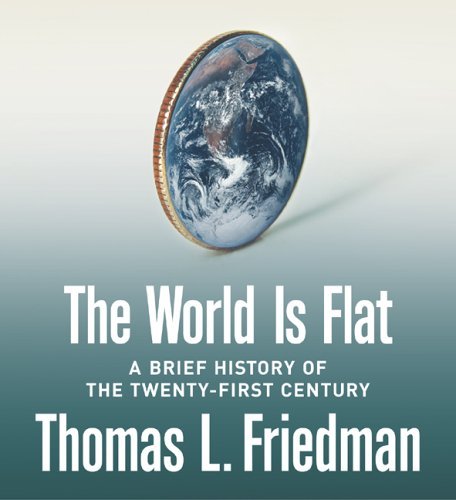
Since I am writing this blog much after the fact, I thought it best to look at Thomas Friedman’s The World is Flat retrospectively. Throughout the semester, I think I made my feelings regarding Thomas Friedman and The World Is Flat quite apparent. I found his style of writing to be frustrating and repetitive. Perhaps this stems from his background as a newspaper columnist, but it made reading The World is Flat a difficult endeavor. It did not help that the book was clearly out of date as he talked about as the book was clearly written a few years ago. Despite these flaws, looking back Thomas Friedman was not completely wrong. Even though some would say that The World is Flat is nothing more than a love letter to globalization, Friedman was right about some things.

One of the subjects I felt Friedman correctly identified was “The Steroids” as he called them. Friedman described the steroids as things like mobile phones, Voice over Internet Protocol (VoIP), and personal digital assistants. When Friedman wrote first wrote this book in 2005, cell phone use was just become widespread amongst the general population. When he released the latest edition in 2007, the IPhone had not even been released to the public yet. At the time, the Motorola RAZR was the most popular cell phone on the market.

Since 2007, "smart phones” have dominated the cell phone markets. These smart phones are just the very “steroids” that Friedman first imagined when he was imaging future flatteners. Today, I can take a picture, send that picture out as a tweet, and then get directions to my house all in one device. In 2007, I would have had to take out my digital camera, use my Garmin to get back home, and then download that picture to my home computer. After I had downloaded that picture, finally I would have uploaded that picture to Twitter. The cell phone has allowed the user to shape, manipulate and transmit information virtually on the go.

In The World is Flat, Friedman definitely over played the role of globalization going into the future however. While the world has become much more globalized, it has not come close to the levels that Friedman predicted. The world economic downturn definitely played a role in the hesitance for countries and companies to continue embracing globalization as they once had. Since the economies became so interconnected, the downturn spread to other economies around the world. Because of the global economic downturn, some countries have even considered the option of withdrawing from economic and political unions. The economic downturn was not the only reason why for globalized failed to reach the levels Friedman predicted.  After a certain point, the law of diminishing returns begins to apply to the application of globalization.

Overall, Friedman was definitely an interesting read and set the mood throughout our various course discussions. Perhaps If I had read The World is Flat when it was originally written, I would not have had such a problem with many of his arguments. However, reading them now many of the arguments just seem wrong.

Friday, October 28, 2011

Required #8 - Occupy Wall Street


As the "Occupy" movement continues a month after beginning, it has been interesting to look at. What started as a protest in New York has become a global movement across the world. "Occupy Insert Location Here" have sprung up around the world from college campuses to cities in Europe and Australia. One of the defining characteristics of the movement is a lack of singular goals among the different "Occupy" locations. The goals of those protesting in New York are different from those at the "Occupy Penn State." Those protesting in New York are protesting against the United States banking system, while those at Penn State are protesting more local issues. Critics of the movement use this lack of singular goals to label the movement as just a bunch of middle-class kids protesting because it is cool. Supporters of the movement say that this is a good thing because it shows the movement is a democratic movement. I personally find that this lack of a singular goal is harmful to the movement. Over the course of the month, I have seen various goals promoted as the official "Occupy Wall Street" demands. While I agree with some of the goals of the movement, some of these demands have been so ridiculous that I have had a hard time taking them serious as a whole.

The "Occupy" movement has become an interesting case study to look at how various factors have influenced the movement. The OWS movement has benefited immensely from using social media and other technologies. The movement began as groups of individuals frustrated at the current conditions rallied others to being protesting. Once other people saw the protestors in New York, they were inspired to being protesting at their town or campus. Some protestors on the fence joined the movement after seeing their friends protesting. Suddenly, it became the cool thing to do so they joined in.

This movement has become a truly global movement. What started out a protest in New York protesting the banking system has become a global movement. There are people protesting in New York, Oakland, Greece and Penn State just to name a few. One of the underlying principles of the movement is that there is not a single underlying goal of the entire movement. There are just broad principles that those protesting believe in. Each location is protesting local issues, but remains committed to the broader global movement. 

I think that Gladwell would be supportive of the Occupy Wall Street movements across the globe. In his book The Tipping Point: How Little Things Can Make a Big Difference he wrote, "That is the paradox of the epidemic: that in order to create one contagious movement, you often have to create many small movements first." The OWS protests demonstrate just how true Gladwell was. What started as a protest in New York against the banking system has become a global movement protesting the current conditions in general. If individuals had not been inspired to protest outside of New York, this would not have become a global movement. I think Morozov on the other hand would not be as supportive of the movements. While he would be encouraged that in-person activism had spread, he would probably be critical of the evaluation that this is a social media revolution.

Tuesday, October 18, 2011

Required #7 - The Net Delusion


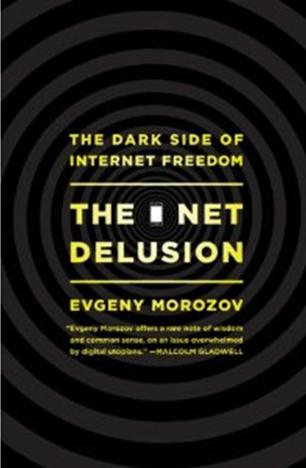
I found The Net Delusion by Evgeny Morozov to be a fascinating read. Prior to reading this book, I was aware of some of the dangers of technology but not to the extent, that Morozov described. Morozov warned that for every "good" thing that a person can do with new technologies, someone is using that exact same technology for "bad." Morozov also spends most of his book attacking the ideas presented by Friedman in The World is Flat. As a Friedman-hater, I found myself agreeing with the ideas presented by Morozov in this book. I thought that Morozov did a great job of presenting examples to support his ideas throughout this book.

Prior to this class, we had discussed how groups like Ushahidi are using text-messaging services for good.  However, Morozov describes how that text messaging is also being used for incite hate across the globe. The story that stood out to me about the danger of text messaging was that of the Xuri Toy Factory. An internet article claimed, "Six Xinjian boys raped two innocent girls at the Xuri Toy Factory." Ten days after the article went live, a mob of angry Han people       attacked a group of Uighur factory workers killed two and injuring hundreds.  Both sides then used cell phones to mobilize. Eventually, the problem got so bad that officials had to shut down phone communications. Authorities discovered that the article was wrong and a disgruntled ex-employee fired by the Xuri Toy Factory had posted it.

The Uighur-Han clash in 2009 highlights two problems with new technologies. The first problem was the use of cell phones to incite hate. Cell phones allowed members to spread rumors concerning the factory attack. These rumors overstated the situation and mobilized both sides causing further conflict. Cell phones also helped the spread of a viral video showing factory workers beaten by an angry mob with metal pipes. Had cell phones not existed, this conflict would not have reached the heights that it had. Protestors on both sides would not have been able to mobilize their side to cause further damage. While Ushahidi shows one use of text-messaging services for good. However, the Uighur-Han clash shows one of the "bad" uses of text-messaging services.

The second problem highlighted by the Uighur-Han clash was the ability of a disgruntled ex-employee to post a news article online anonymously. Both Chinese officials and foreign journalists were unable to verify the credibility of the reports in the article. Instead of verifying the author or the contents of the article, the angry Han people formed a mob to attack the Xuri Toy Factory. Had they taken the time to verify the content, they may have realized that article was not credible. One of the problems with the Internet is the ability for anyone to post anything they want online. No longer can people assume what they read is credible, instead they must determine if the source is credible or not. Anybody in the world could post an article online claiming almost anything. If people found that person to be credible, the readers would believe that the information posted is correct. This makes it very easier for people to influence world events more than ever before.

Friday, October 14, 2011

Required #6- Streisand Effect

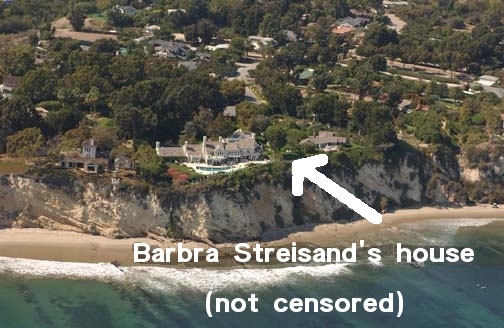
In chapter five: Hugo Chavez Would Like to Welcome You to the Spinternet Morozov talked about the Streisand Effect. The Streisand effect is an internet phenomenon where trying to hide information on the internet generates further publicity. The effect was named for the efforts of Barbra Streisand to hide photographs of her house on the internet. Attempts to hide the house caused internet users to duplicate and mirror images of her house causing more people to know about the images than if she would have just done nothing. Another prominent example is the attempt to block an AACS key from being released on digg.com. Instead of the keying being quietly taken down internet, activists posted the key all around the internet.
In the Internet Age, it is almost better for governments, organizations, and people to leave "bad" information on the internet then try and take it down. It is almost impossible now to take down information from the internet. Any attempts to take down the information, will cause users to quickly replicate and mirror the image across multiple sites making it almost 100% impossible to take down the information.
This Streisand effect can have some potentially very serious negative repercussions. For example, if someone was accused of murder and someone else created a site highlighting all of the accused person's personnel information. If it later came out that the person accused was innocent, the accused person's information would be all over the internet for anyone to see. Most people in that situation would try and get that site taken down so that people cannot see all of their personnel information. If the Streisand Effect phenomenon were to happen, that personnel information would now be all over the internet.
While some would argue that, it is better for that person to just leave the site alone because there is so much information on the internet. While that is probably technically correct, it does not mean it is the right thing to do. I know that I would not my personnel information all over the internet in a situation similar to that.
This is just one of the negative impacts of technology that Morozov talked about multiple times in his book. I tend to agree with most of Morozov's conclusions regarding technology. Technology can do great things, but there are many potentially negatives that users must be careful. Every technology that exists can be used for good and bad and users must be careful not to assume people will always use technology for good.

Tuesday, October 4, 2011

Required #5 - Think Tanks: Good, Bad or Neutral?


In class, Dr. Tapia asked if think tanks were a good thing or a bad thing. The class was split just about evenly on whether think tanks were good or bad. Initially, in class I answered that think tanks can be considered a good thing. Like many issues in the world, it is not possible to just say think tanks are good or that they are bad. The truth in the matter is that the real answer is probably somewhere in the middle of good and bad. I think that think tanks are inherently good, but that some of the practices and results can be bad at different times.
                I consider think tanks to be inherently good, because most of the time the results and actions they take are done in good faith. Think tanks work to publish and make recommendations on the issues that are most pressing to the nations. Members of these think tanks are some of the best and brightest in the world and can provide recommendations that are beneficial to the country. Think tanks also allow the government to have more options to consider when making policy. Someone within the government may fear losing their job if they make a recommendation that does not match the official party line. A think tank can make a recommendation without worrying about the potential political problems.
                Think tanks are not without criticism however. The problem with some think tank publications is a problem of human nature itself. Some think tanks look at certain issue from specific angles that can create what is perceived to be a bias. If you are looking at a publication by the Heritage Foundation on tax issues you will get a completely different viewpoint than if you asked the Brookings Institute. Someone from the left may look at a Heritage Foundation publication and claim that the report is biased and is presenting false information. Someone from the right however, will look at the Brookings Institute report and say the exact same thing. These ideology differences are not a reason enough to criticize think tanks for bias.
                However, think tanks do run the risk of being influenced by corporate donations. There is a difference between a ideology difference and being biased by the donor. Think tanks must be careful that their research and publications are not improperly influenced. Once think tanks become influenced by corporate money it is difficult to trust the future publications by that think tank. If a think tank has changed policy recommendations to match a corporation’s interest in the past, what is to stop them from doing that again in the future?
                Overall, I consider think tanks to be a good thing in the United States. They are able to provide recommendations that are beneficial to the decision makers in the Federal government. They do not have to concern themselves with towing the party line and can make the difficult recommendations. Think tanks must be careful to avoid changing recommendations to match corporate donations however. Letting money influence the recommendations weakens the think tanks integrity and makes It difficult to trust in the future.